How To Meditate On Scripture
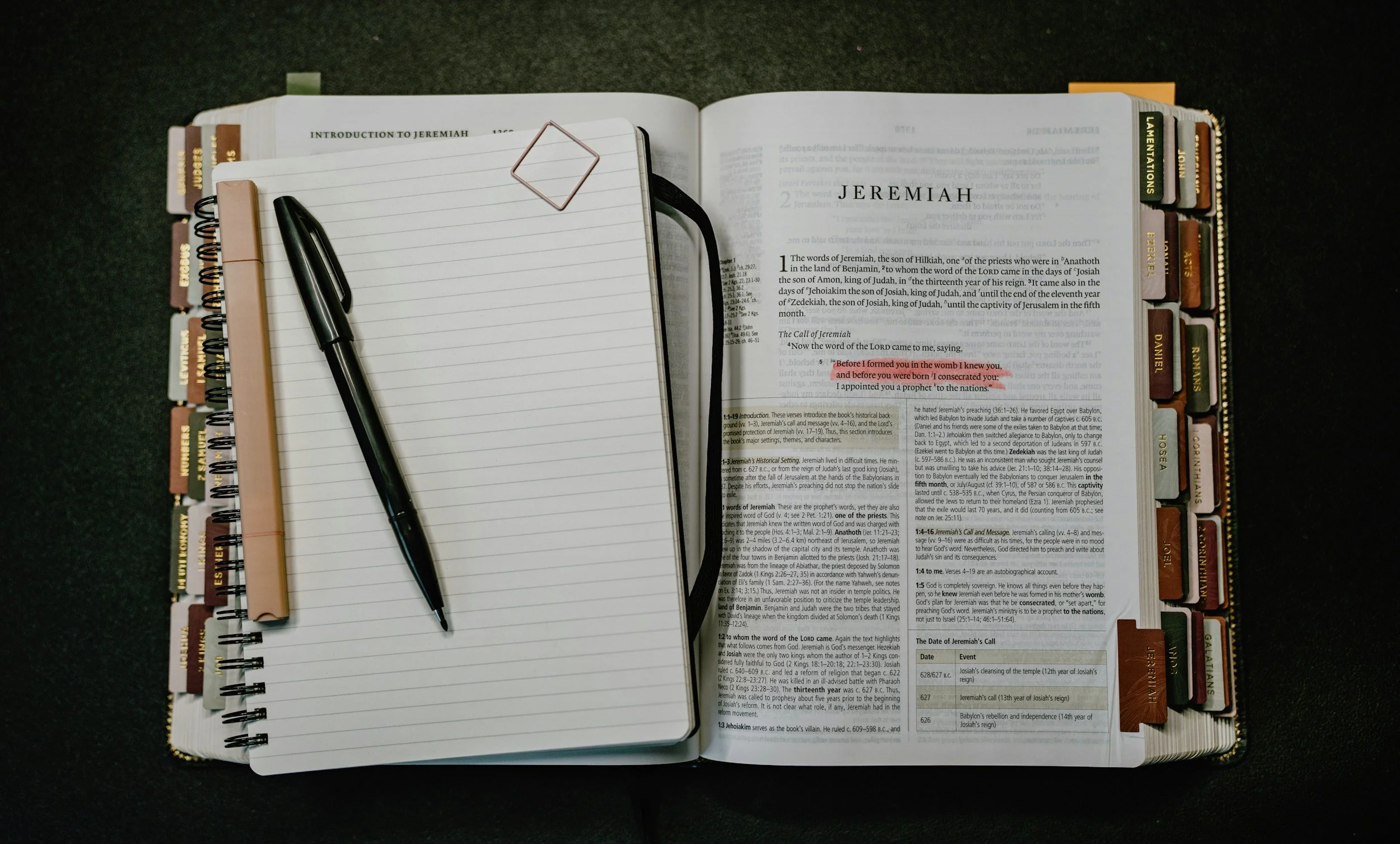
Why Meditate on Scripture?
If you found your way here, you may be in a variety of places in your faith journey. You might be a long-time believer who wants to go deeper, think about Scripture more intentionally, or begin memorizing God’s Word. You might be walking through an anxious season and looking for a biblical way to steady your mind and heart. Or you might be a newer believer who has read verses about meditating on Scripture and is wondering what that actually looks like in real life.
Wherever you are coming from, this practice is not reserved for a certain level of spiritual maturity. Meditating on Scripture is an invitation for anyone who desires to know God more deeply and allow His Word to shape daily life.
As Christians, everything we do is meant to be shaped by God’s Word. Scripture is not just something we read for information. It is something we return to, sit with, and allow to form us over time.
Psalm 1 (ESV) describes the blessed person this way: “His delight is in the law of the Lord, and on his law he meditates day and night.” Psalm 119 (ESV) echoes this heart posture: “Oh how I love your law! It is my meditation all the day.” And in Joshua 1:8 (NIV), gives a clear instruction and promise: “Keep this Book of the Law always on your lips; meditate on it day and night, so that you may be careful to do everything written in it. Then you will be prosperous and successful.”
These verses remind us that meditation on Scripture is not optional or reserved for a select few. It is central to the Christian life. If God’s Word is meant to guide our decisions, shape our character, and anchor us in truth, then we have to know it. When we do not know what Scripture says, it becomes much harder to discern how to handle life’s challenges, temptations, and relational struggles.
Meditating on Scripture also equips us for spiritual battles. When lies come at us, whether from the enemy, from other people, or from our own thoughts, Scripture gives us something solid to stand on. Knowing God’s Word allows us to recognize what is false and replace it with what is true. Over time, meditation stores truth in our hearts so that it is available when we need it most.
Scripture also calls us to focus our minds on what is righteous, pure, holy, and pleasing to God. When we meditate on God’s Word, we are intentionally directing our thoughts toward Him and His character.
A Common Misconception About Scripture Meditation
When many people hear the word meditation, they picture long, uninterrupted periods of time, complete mental stillness, and the ability to stay perfectly focused for thirty or forty minutes at a time. This expectation alone can cause people to give up before they even begin.
Biblical meditation does not require extended silence, mastery, or a mind that never wanders. Our minds naturally drift. That is part of being human. The goal is not perfection. The goal is returning. Each time your attention comes back to Scripture, you are practicing meditation.
Scripture meditation can happen in seconds or minutes. It can happen while brushing your teeth, making your coffee, or waiting in line. God is honored by your willingness and your heart to draw closer to Him. Grace is part of the process.
One of the most important things to say upfront is this: meditation will look different in different seasons of life. Some seasons allow for longer, quieter stretches of time. Other seasons are busy, loud, and fragmented. If you do not have fifteen or twenty uninterrupted minutes right now, that does not mean you are doing something wrong or failing spiritually.
There is no shame here. The goal is not comparison. The goal is connection.
Like any spiritual practice or skill, Scripture meditation works best when it fits into your real life. Below are several ways to meditate on Scripture. Some are better suited for slower seasons, while others work well for people who are constantly on the go.
4 Ways to Meditate on Scripture
Visualizing Scripture
One way to meditate on Scripture is to intentionally slow down and place yourself into the passage using your imagination. This works especially well in a quiet, comfortable environment where you can limit distractions.
You might begin by choosing a familiar passage. Psalm 23 (ESV) is a powerful example:
“The Lord is my shepherd; I shall not want. He makes me lie down in green pastures. He leads me beside still waters. He restores my soul. He leads me in paths of righteousness for his name’s sake. Even though I walk through the valley of the shadow of death, I will fear no evil, for you are with me; your rod and your staff, they comfort me.”
To meditate on this passage, find a comfortable place to sit or lie down. Close your eyes and take a few slow, deep breaths to help your body settle. Then begin to imagine yourself with the Lord as your shepherd.
Picture the green pasture. What does it look like? What shades of green do you see? What does the ground feel like beneath you as you lie down? Notice the still waters nearby. Are they a stream, a river, or a quiet pond? What do you hear as the water moves gently? What do you smell in the air?
Imagine the Lord with you. What does it feel like to know He is guiding you and protecting you? As you picture yourself resting in that pasture and being led beside still waters, notice the phrase, “He restores my soul.” Pay attention to what happens internally as you sit with that truth.
This kind of meditation allows Scripture to move from being words on a page to a lived experience. You are not rushing through the passage. You are dwelling in it, engaging your senses, and allowing your heart and body to receive what God is communicating.
Memorizing and Repeating Scripture Throughout The Day
Another powerful way to meditate on Scripture is through memorization and repetition. This does not require long blocks of time and can easily fit into a busy schedule.
Choose a verse or even a portion of a verse. Write it down on sticky notes and place them in locations you already visit throughout your day. A bathroom mirror, the coffee maker, the refrigerator, or your car dashboard are all practical options.
When you see the verse, read it slowly. Repeat it to yourself as you brush your teeth, make coffee, pack lunches, or prepare dinner. Let the words settle into your mind as you go about your routine.
Over time, that Scripture will become familiar. Eventually, you will not need the sticky note anymore. You can take that verse with you into meetings, car rides, school pick-ups, or moments of stress. Repeating Scripture throughout the day keeps your mind anchored in truth even when life feels chaotic.
Creating Art Inspired by Scripture
For those who are creatively inclined, Scripture meditation can also take a visual form. Choose a passage and ask yourself, if this Scripture were a picture, what would it look like?
As you think about how to represent the verse visually, your mind naturally dwells on its meaning. You have to consider the imagery, the emotions, and the message of the passage in order to create it. This process itself becomes a form of meditation.
You do not need to be a professional artist. This can be as simple as a pencil sketch, watercolor, or even a digital drawing. The goal is not the finished product. The goal is engaging deeply with the Scripture as you create.
Reflecting on & Asking Questions About Scripture
Another meaningful way to meditate on Scripture is through reflection and curiosity. As you are reading the Bible, you may come across a passage that raises questions, feels convicting, or seems especially relevant to your current season of life. Rather than moving past it quickly, you can choose to stay with it.
This form of meditation looks like slowing down and thinking intentionally about what you have read. You might bring that passage to God in prayer, talk it through with trusted people in your circle, or quietly reflect on it on your own.
Some helpful questions to guide this kind of Scripture meditation include:
What does this passage mean?
What does this Scripture reveal about who God is?
What might God be teaching me through this verse or story?
How does this apply to the situation I am walking through right now?
Asking these questions allows you to dig deeper into the text and engage both your heart and your mind. You are not rushing toward answers. You are allowing God’s Word to challenge, shape, and guide you over time. This kind of meditation can be especially powerful when Scripture confronts areas of growth, invites repentance, or offers wisdom for real-life decisions.
A Final Encouragement
Meditating on Scripture is not about checking a box or performing a spiritual task correctly. It is about creating space for God’s Word to shape your thoughts, responses, and identity over time.
Whether you have extended quiet moments or just brief pockets throughout the day, God meets you where you are. Small, consistent engagement with Scripture can have a profound impact. As you meditate on His Word, you are storing truth in your heart, equipping yourself for future challenges, and drawing closer to the One who speaks life.
If you are in a busy season, start small. Choose one verse. Choose one method. Trust that God honors your willingness and meets you in the process.

Meet the author:
Sarah Theimer is a Licensed Professional Counselor in Virginia and the founder of Breakthrough Mental Health Counseling. She specializes in anxiety, trauma, and Christian mental health counseling, helping adults integrate biblical truth with evidence-based therapy. Through virtual counseling across Virginia, Sarah offers a warm, compassionate space that encourages growth, self-awareness, and meaningful change.